Kulash Akhmetova and the rise of the female voice in kazakh poetry
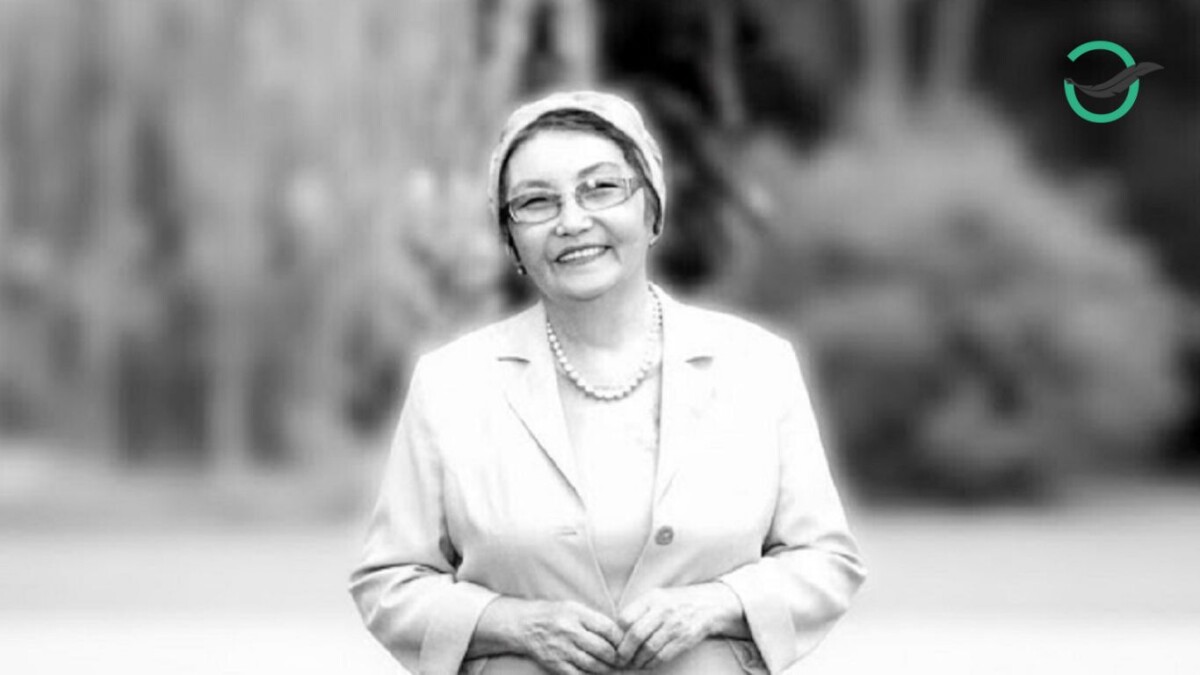
With the passing of Kulash Akhmetova, readers once again turn to the strength and gentleness of her voice – a voice that continues to resonate with clarity, compassion, and moral depth. As a leading figure of the poetic wave that emerged in the 1970s and 1980s, she helped reshape Kazakh literature, bringing a distinct emotional and ethical sensibility to center stage.
A Wave of Women’s Voices: 1960s–1990s
Kazakh poetry underwent a quiet yet momentous shift in the 1960s when women poets began claiming stronger creative presence. Writers such as Tursynkhan Abdyrakhmanova, Fariza Ongarsynova, and Marfuga Aitkhozhina infused the literary field with intimate reflection, bold experimentation, and reinterpretations of national imagery. Their work opened the door for a new generation. By the 1970s, this transformation had become a full literary movement. Kulash Akhmetova–often affectionately referred to as “the poetry queen”–and Khanbibi Esenkaraeva stood at its center, offering a distinctly female perspective that was deeply emotional yet critically engaged. The momentum continued into the 1980s, bringing voices like Shamsiya Zhubatova, Gulnar Salykbay, and Bayan Beketova, and into the 1990s, with Roza Karaeva, Zhanat Askerbekkyzy, and Zhanna Eleusiz carrying the tradition forward. Collectively, they formed an evolving intellectual sisterhood that gave form to women’s interiority, social anxieties, and national imagination during decades of cultural transition.
Kulash Akhmetova: a poetic profile
Born on 25 April 1946 in the Talas region of what was then the Kazakh SSR (now Talas district, Jambyl Region) in a family of educated teachers and workers, Kulash Akhmetova graduated from the Zhambul Medical School, and later studied journalism at the Kazakh State University (graduating in 1973). She published more than twenty poetry collections, among them early works such as My White Flower (1975) and You Are My Happiness (1977), and later volumes like The Land of Stallions (1987) and My Bright Moments (2015). Her poetry is widely praised for its intimate exploration of women’s psychology, the complexities of fate, and lyrical consciousness. Over time, her themes expanded to include national identity, ethical responsibility, and social harmony; yet her lyrical voice remained tender and morally grounded.
Akhmetova’s linguistic signature is often described as a delicate fusion of purity, feeling, and thought. In her poems, she frequently draws on natural and domestic imagery–white flowers, rivers, family life–symbols that speak to both innocence and rootedness. Critics note that her purity of imagery gives way to deep moral reflection: she does not shy away from grappling with loss, justice, and belonging. In one poem included in a Kazakh anthology of contemporary literature she writes: “I always look for a way in verse, to protect people from disaster. … I pour forth my stanzas like birds, turning the embittered once more to love.” This intimacy, however, is tempered with reason: she questions societal divides, reflects on collective memory, and urges unity. Not writing simply for herself, she uses her voice to awaken conscience. Her moral and lyrical clarity offers both solace and provocation.
Reading Akhmetova in English
A deeper understanding of Kulash Akhmetova’s poetics emerges when reading the English translations of her work in the Contemporary Kazakh Literature Poetry Anthology. Her poems included in the volume illuminate the emotional clarity, symbolic precision, and ethical tenderness that define her lyrical world. Together, they offer an intimate window into the poetic architecture that made Akhmetova a central figure in shaping women’s voices in Kazakh literature.
In “Prosperity”, Akhmetova articulates a vision of happiness rooted not in material success but in moral abundance. Wishing for every person “a virtuous partner” and “a golden family,” she redefines prosperity as an ethical condition – one built on kindness, loyalty, and inner harmony. The poem’s imagery is soft and luminous, echoing the nurturing tone that made her work so resonant among younger readers. This moral perspective aligns with the broader argument about Akhmetova’s role as a lyric mentor in the formation of aesthetic and ethical sensibilities: her poetry teaches, not by instruction, but by quiet, affective persuasion.
“Lace” turns domestic craftsmanship into a metaphor for the intricacy of human feeling. The delicacy of lacework – an art historically associated with women – becomes a symbol of emotional precision, resilience, and beauty. Here, Akhmetova expands the symbolic vocabulary of Kazakh poetry, demonstrating that women’s domestic experience is not peripheral but deeply aesthetic and philosophical. Through finely drawn images and restrained, whisper-like language, the poem reveals how ordinary female labor carries a subtle intellectual and spiritual charge. This adds weight to the claim that Akhmetova carved out new poetic space for women’s interiority in Soviet and post-Soviet Kazakhstan.
In “Spring Poplars”, nature becomes a mirror of emotional renewal. The soft, freshly budding poplars of spring embody both fragility and deep-rooted strength – qualities Akhmetova frequently associates with feminine resilience. The poem continues the Kazakh lyrical tradition in which landscape reflects inner states, yet Akhmetova personalizes this connection: the poplars’ renewal echoes her own vision of human rebirth, hope, and moral awakening. By grounding psychological transformation in familiar national imagery, she binds personal feeling to collective memory.
Kulash Akhmetova’s poem “I possess all languages of the world… but I respond to the world in Kazakh” (“Mother Tongue”) reflects her understanding of language as both a universal and deeply personal force. She portrays inspiration as a moment when “each word burns as if on fire,” allowing her to speak not only in many languages but even to “birds” and “snow,” suggesting a heightened poetic perception that transcends human boundaries. References to Petrarch, Byron, and Rossini place her within the global artistic canon, emphasizing that emotion and beauty are internationally legible. Yet this universality culminates in a return to her linguistic home: despite understanding “all languages with my heart,” she chooses to answer the world in Kazakh. The poem asserts that a poet’s true voice is rooted in the language of emotional instinct, cultural memory, and spiritual authenticity – and for Akhmetova, that voice is unmistakably Kazakh.
Akhmetova’s poems reveal a poet who writes with moral intention, yet avoids didacticism; who draws from women’s lived experience, yet speaks to universal human concerns; who remains rooted in Kazakh symbolic traditions, yet articulates them with an unmistakably modern, intimate voice. Through the anthology, international readers encounter what Kazakh audiences have long recognized: that Kulash Akhmetova’s lyricism stands at the crossroads of tenderness and integrity, personal emotion and civic consciousness. Her poetry, even in translation, retains its clarity – a reminder of why her voice continues to resonate across generations.
Akhmetova as a cultural pillar: influence and legacy
Now Akhmetova’s work has been deeply woven into the moral and cultural education of Kazakh youth. Her poems appear in school textbooks, are recited in class, and quoted in university lectures–contributing to the formation of aesthetic taste and ethical sensitivity across generations. According to media tributes at her passing, she “never abandoned her pen to the end of her life … always caring for the younger generation, supporting their creative growth.”
Through lines about love, duty, family, and homeland, she silently became a moral guide: not a teacher in a classroom, but a lyric mentor in the hearts of readers. Her poems taught values–of love, forgiveness, integrity–in a way that resonates more softly, but perhaps more deeply, than any lecture. Perhaps the most striking aspect of Akhmetova’s work is how she used poetry not just to express herself, but to contribute to a shared ethical vision. She wrote not for fame, but to frame a moral discourse: respect for heritage, responsibility to future generations, and love for one’s people. According to a television tribute by Qazaqstan TV, she regarded her readers–especially the young–as companions in a spiritual journey, always urging them toward kindness, loyalty, and dignity. Her writing also carried civic weight: she received major awards including the Lenin Komsomol Prize (1978) and later national honors such as the Orders “Parasat” and “Qurmet”. These honors underline her role not merely as a poet, but as a cultural pillar.
Akhmetova’s work emerges at the crossroads of personal introspection and national transformation. Her poetry coincides with a period in which women in Kazakhstan asserted their creative voices within a rapidly changing Soviet and post-Soviet society. Her practice can be compared to the celebrity book-club phenomenon in the Anglophone world: think of how Oprah Winfrey’s book selections gave cultural weight to novels, or how Reese Witherspoon’s “Book Club” spotlighted women’s narratives. Similarly, Akhmetova’s voice gave public space to women’s interiority in Kazakh literatures. Her moral-lyric approach resonates with global currents: the re-emergence of poetry as ethical voice (e.g., Amanda Gorman in the US), and the renaissance of women’s poetic communities worldwide. She stands as a figure who locates Kazakh women’s lyricism within a broader international field while remaining deeply rooted in local values and language.
Kulash Akhmetova belongs to a rare company: female Kazakh poets who shaped not only the literary canon but also the moral imagination of their nation. Her work stands at the crossroads of feeling and thought, tradition and modernity. In an era when women’s voices were emerging more strongly in Kazakh literature, she offered a voice that was both gentle and courageous, personal and universal.
Though she has passed away, her poetry continues to live on–in school syllabi, in public memory, and within the reader’s soul. Her legacy is not just verses on a page, but an ongoing moral conversation, carried forward by every generation that encounters her words.